



Over the weekend an article about New Era Energy & Digital (NUAI) went viral on X, with Tiny's co-founder Andrew Wilkinson calling it a “Picasso in a garage sale”. Interestingly enough, prior to this, I had already been seeing investors I follow take the name seriously and a number of well-respected IREN bulls were among them. All of this motivated me to understand the company better for myself rather than form a view from someone else's tweets.
In 2025, I invested millions into a Picasso.
— Andrew Wilkinson (@awilkinson) July 18, 2026
Now I'm buying a second one.
PS: It's not a painting. https://t.co/dTXxfB8DO0
This piece is simply me doing that homework in the open: what NUAI is, where it came from, what it's building, and what the shares might be worth if the bull case eventuates.
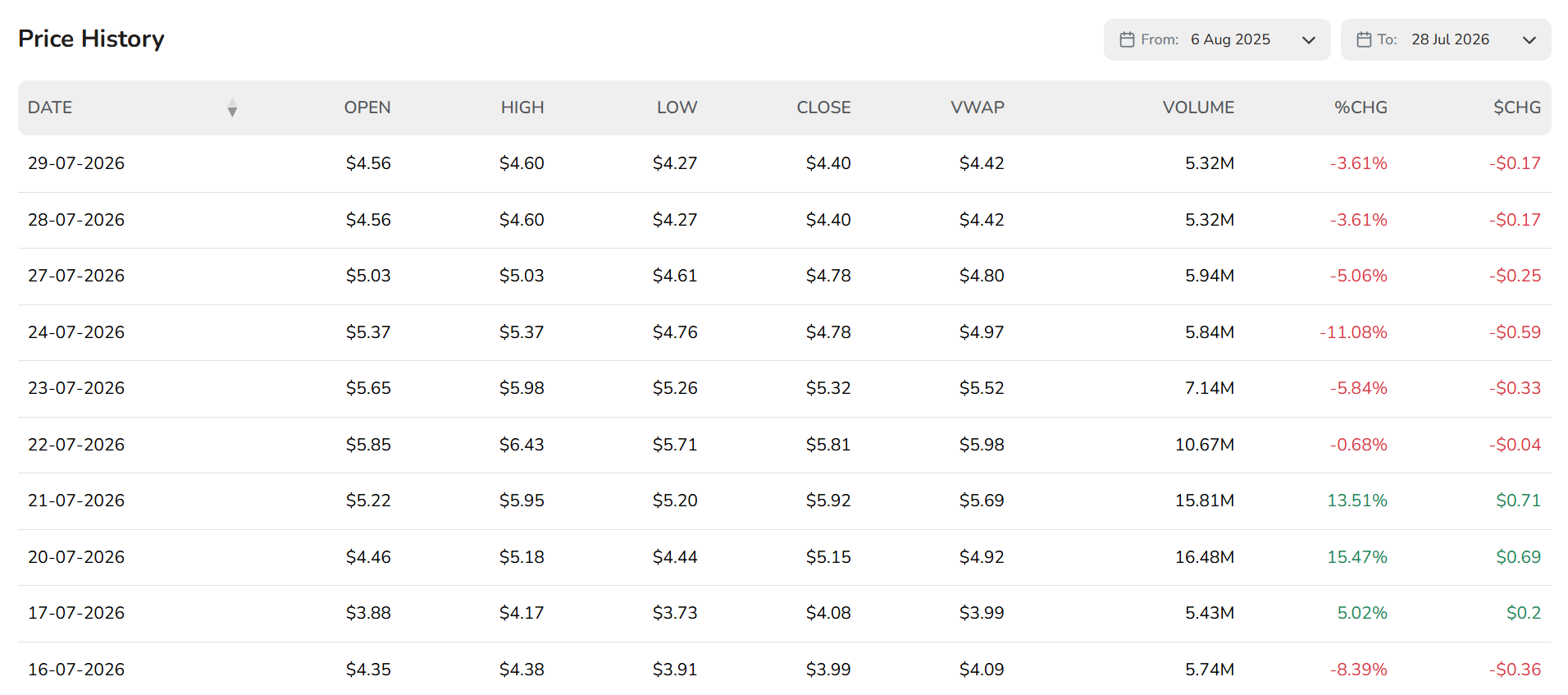
By the way, the trading volume has roughly doubled or tripled last week and the stock rose to about $6 from $4. Interest is clearly heating up even though nothing material has happened.
Where NUAI Came From, and What It Does Now
NUAI formed in 2020 as a Permian Basin helium and natural gas producer. It went public through a SPAC merger in late 2024 as New Era Helium under the ticker NEH. The pivot came in the second half of 2025, when the company changed its name to New Era Energy & Digital (new ticker NUAI) and shifted focus to building power and digital infrastructure for AI. Its CEO, E. Will Gray II came from West Texas energy, and that local background is what gives some people confidence the company can actually compete.
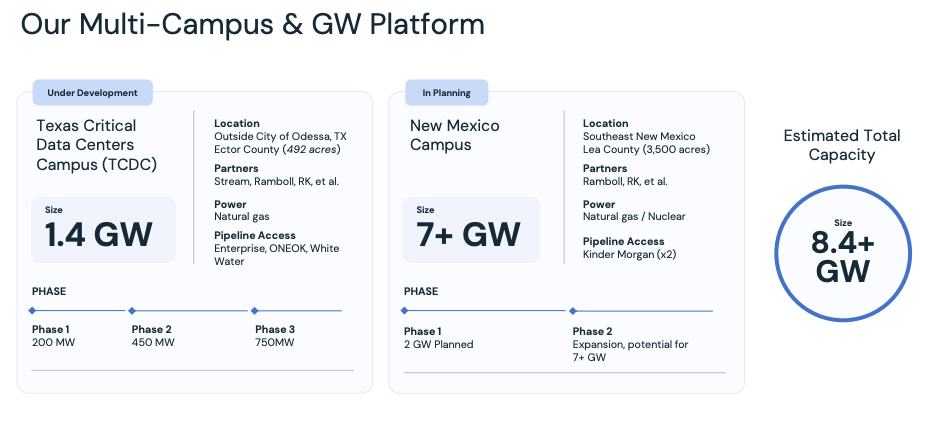
NUAI’s core strategy is using a hybrid model that combines grid access with behind-the-meter natural gas generation on-site in the Permian Basin, and to develop data centers next to that energy source. It focuses on delivering “powered land”, and especially “powered shells”, that can be leased long-term (typically NNN) to hyperscalers, with secondary interest from neocloud and enterprise operators. This is essentially a build-and-lease model aimed at recurring revenue, similar to the path many former Bitcoin miners have taken as they re-rated into AI/HPC infrastructure.
However, right now the company has a pretty weak financial foundation. Trailing revenue is negligible. It lost about $9 million in the first quarter, finished March with around $2 million in cash, and its filings carry a liquidity & going-concern note. The company has raised more money since, but that doesn’t change the picture much. Investors at this stage are really just buying the company with a plan and some land, not a business that generates cash.
TCDC: The Flagship Campus
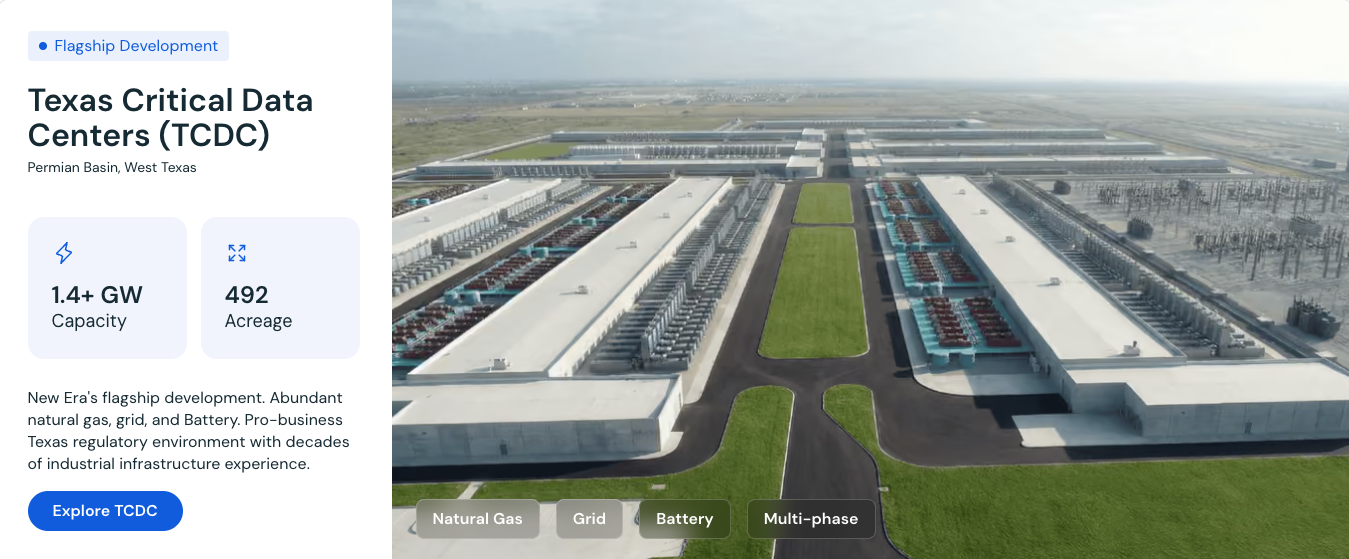
Texas Critical Data Center, or TCDC, is NUAI’s flagship site and the one almost every bull is focused on. Getting a clear picture of what it does, is most of the work in understanding NUAI's whole story.
It's a 438-acre campus in Ector County, just outside Odessa. As of January 2026 NUAI owns all of it after buying out its former partner, Sharon AI, and taking the joint venture to full ownership. The roughly $72 million it paid went almost entirely to the land. Unlike a lot of announced-but-still-hypothetical sites, TCDC is real, owned outright, and already through early engineering.
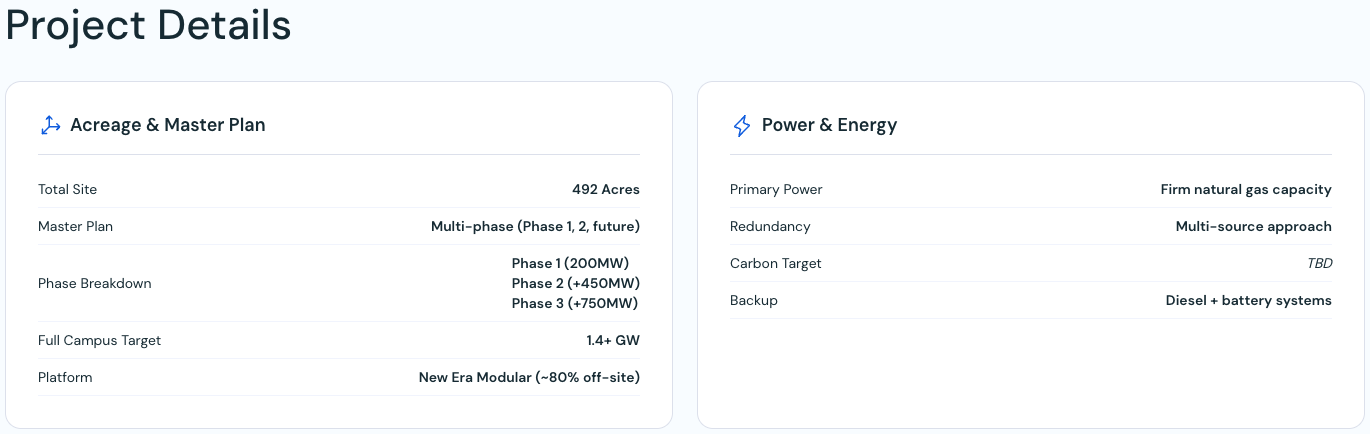
The plan is a campus of more than a gigawatt, built in three phases. Phase 1 is about 200 MW. It is designed as a powered shell fed by adjacent generation so it can come online without waiting years in a grid interconnection queue. Phases 2 and 3 then scale up using behind-the-meter natural gas. The goal is roughly 1.4 GW total.
That combination is what makes TCDC the clear flagship:
- a large, fully owned footprint.
- The first phase can be powered relatively quickly, and a realistic path to gigawatt scale in a place built for it.
- the company has a separate 7 GW land option in New Mexico that is still early-stage. If NUAI is going to prove its model anywhere, TCDC is where it happens first.
Right now TCDC does not have a signed tenant yet. The whole bull case is a bet that a site this large and this cheaply powered will attract a colocation or hyperscale client once it's ready to operate. That is a reasonable bet given how short the market is on power, but it has not happened. The sensible way to look at it is to separate two things: what the site would be worth if it lands a tenant; and the odds of it actually doing so.
What TCDC Is Worth If It Gets Leased
If everyone is betting on TCDC, a useful exercise is to work out how much value the site creates once built and leased. Then see how much of that the current price already assumes.
Our colocation deal simulator lets us model what a colocation lease is worth by valuing stabilized leases the way a real-estate investor would. The lease implies a first-year rent, the NOI margin turns that rent into operating income, an exit cap rate converts the income into an asset value. Subtracting the remaining capex leaves the value the campus actually adds. Roll that up and you get a per-share figure.
The inputs here are mine, I set a lot of them to industry-average ranges, at the more conservative end. You may have different judgement, so please treat my session result as a starting point rather than settled fact.
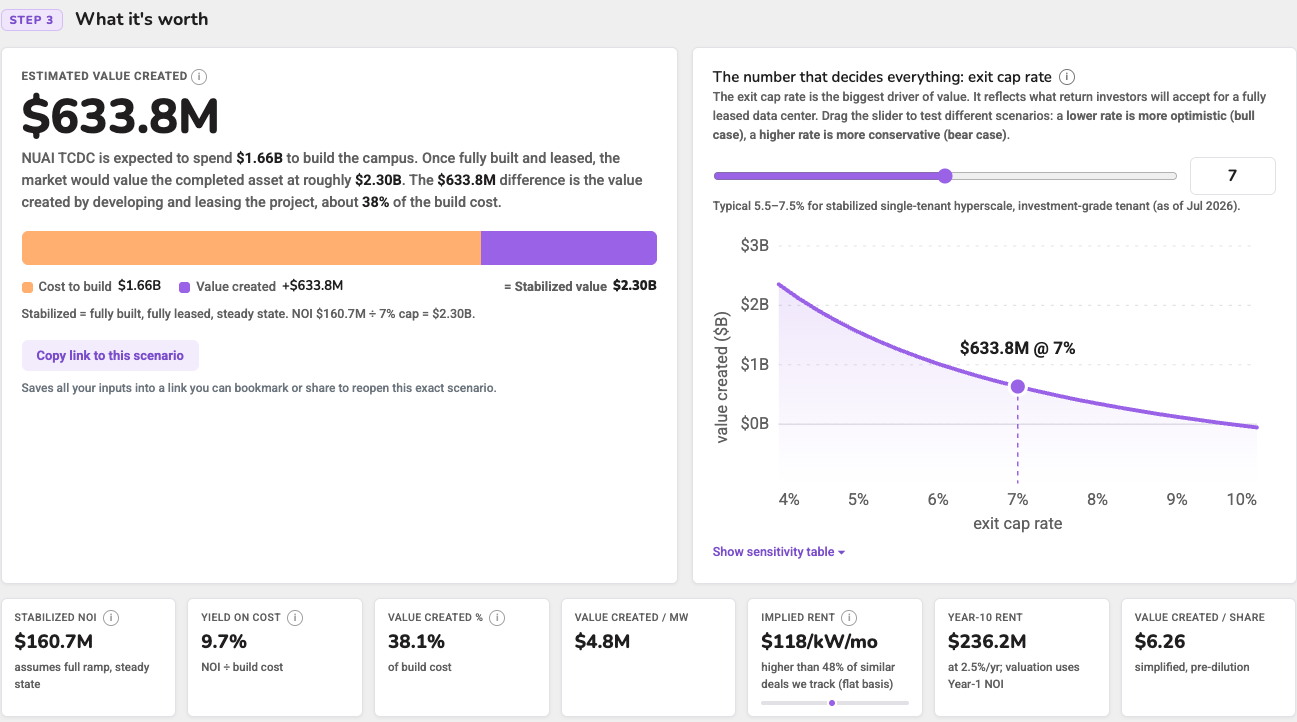
Some quick notes about my simulated scenario: I ran Phase 1 as 133 MW of critical IT load, which is the roughly 200 MW of raw capacity at a conservative 1.5 PUE. On top of that I used an average of $1.7M/MW per year over 15 years with a 2.5% annual escalator. I used a 95% NOI margin, and a 7% exit cap rate. I referred to the range recorded by our hyperscaler deal tracker for those assumptions. My current capex estimation is 12.5M per MW, by assuming NUAI builds the full facility and collects full turnkey fees. I also used the current total outstanding shares without considering dilution.
The simulated result is ~$9 a share. Flexing the two inputs that move it most gives this range:

What the Price Already Assumes
A $9 base estimate next to a $5.32 share price looks like easy money. But three things sit in between. A buyer should net them out before calling it cheap.
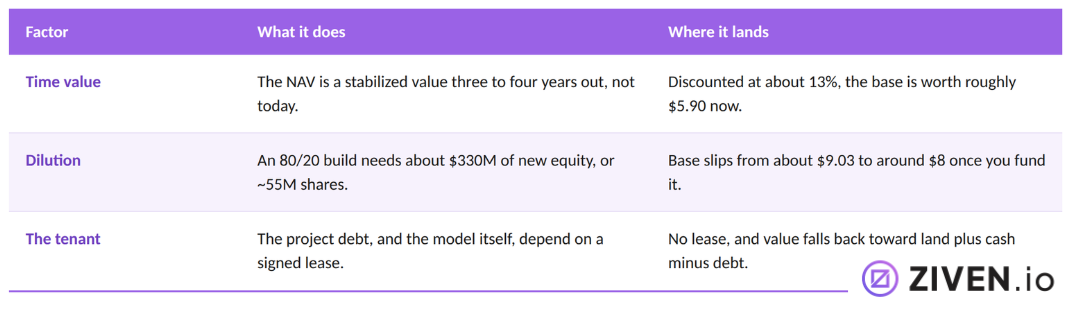
Put those together and the gap mostly closes. Discounted back to today, the base case is worth something like $5.50 to $6.30, which is roughly where the stock already trades.
Push a little further and you can ask what the price implies. A signed TCDC phase 1 is worth around $5.90 today. A failure to sign pulls the stock back toward its asset value. So a $5.32 price is consistent with the market already assuming a high chance the lease gets done. And that is on Phase 1 alone. In other words, NUAI has been priced like things are going right.
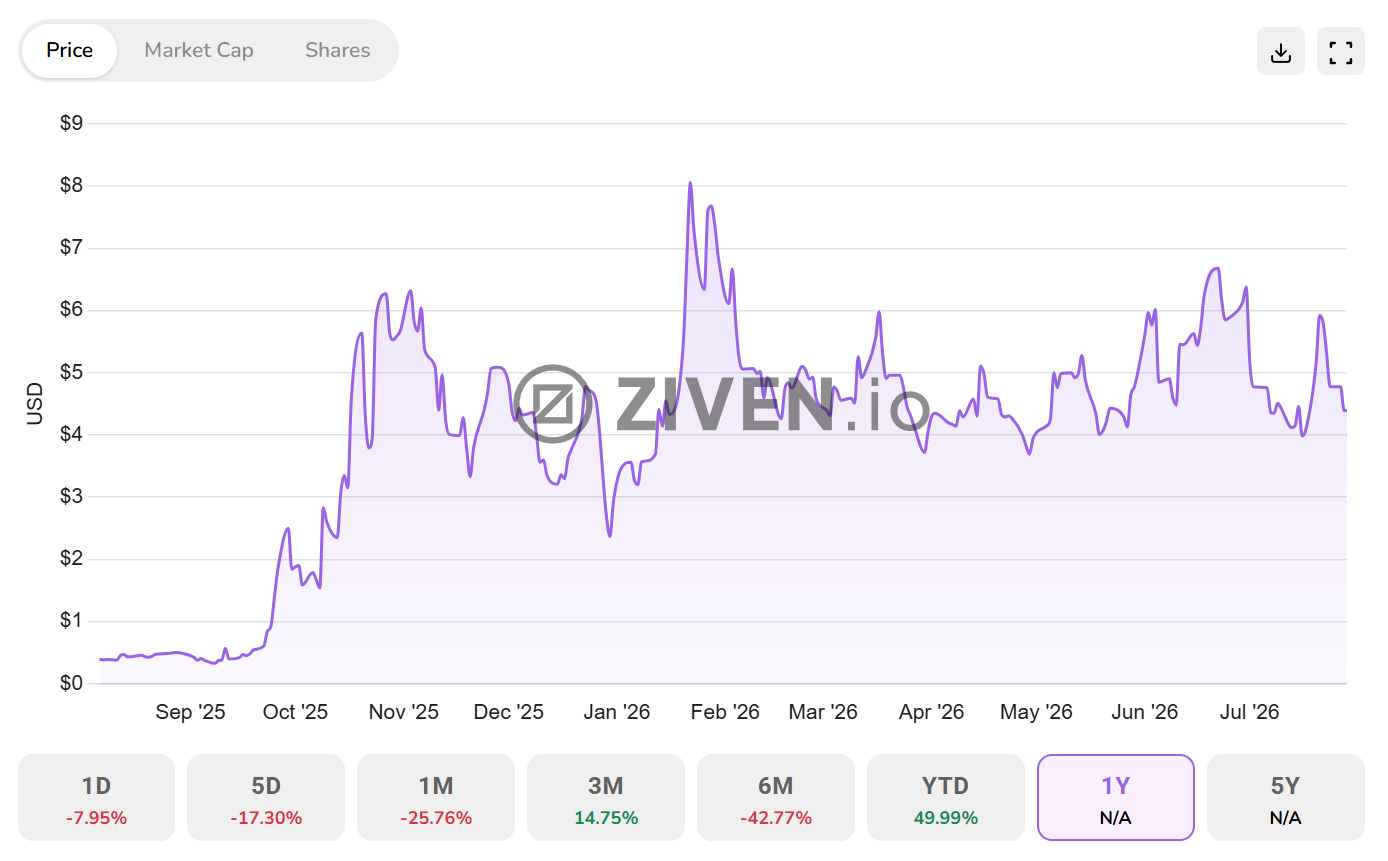
Some risk-averse investors may also want to know where the floor is if things go wrong. No one can predict the market but we can look at the trading history. This is a company that traded under a dollar as recently as last year. It raised equity at $2.5 last September, and still carries a going-concern flag. Building even Phase 1 will cost well over a billion dollars against the roughly $2M of cash it held at quarter-end, so it leans on drawing its $290M credit facility and raising a good deal more. Most of that financing realistically arrives only after a tenant signs. If that tenant never appears, the income model is worth nothing. The financing gets harder, and there is plenty of room beneath today’s price.
The bear column in the chart above still assumes a lease. So we didn't really model cases where a data center never gets built and leased.
Final Thoughts
We all want to find that Picasso in the garage sale. The returns live in the gap between a plan and a proven business. NUAI has real ingredients: an owned, gigawatt-scale site, genuinely cheap Permian power, and a management team that knows the ground. Investors like Agrippa Investments and Kash Ramki are constantly tracking each corporate move and openly share their thoughts along the way. It is worth following if you want to potentially add a position in NUAI.
What I would add is this: let principles guide you. The model shows the prize is possible. A signed Phase 1 could plausibly be worth a double from here. But discounted to today, and stripped of the tenant that has not signed, the stock is not obviously cheap. It may already be priced for a good outcome. So rather than asking whether this is the next 10x, I would suggest watching the few things that would actually move it from vision to proven.
The first is a signed lease or letter of intent with a named client. That is the single catalyst that turns the model into a real number. After that, lock in the Stream Data Centers agreement and secure the extra land next to the site. Meanwhile, get financing methods that do not bring heavy dilution. And a clear path to powering Phase 1. The sooner the site energizes, the better.
If you like modeling the value creation of TCDC, run your own scenarios. Base them on your view of cost and exit cap rate. Then consider the credit rating of that tenant. Let the sensitivity analysis, rather than someone else’s assumptions, decide whether the thesis is working.
Disclaimer: The views expressed in this article are my own and are based on publicly available information. This content is intended for informational purposes only and should not be construed as investment advice. Readers are encouraged to conduct their own research before making any investment decisions. Past performance is not indicative of future results.


