



You have probably seen some version of this by now. Situational Awareness, the fund run by former OpenAI researcher Leopold Aschenbrenner, sold the bulk of its public stock holdings to Ken Griffin’s Citadel on Thursday, reportedly just days before Aschenbrenner’s wedding.
For the past year and a half this fund was treated as something close to an indicator for the whole AI pick-and-shovel bet. Many people genuinely watched its filings to decide what to buy. It returned 439% net in the first six months of this year.
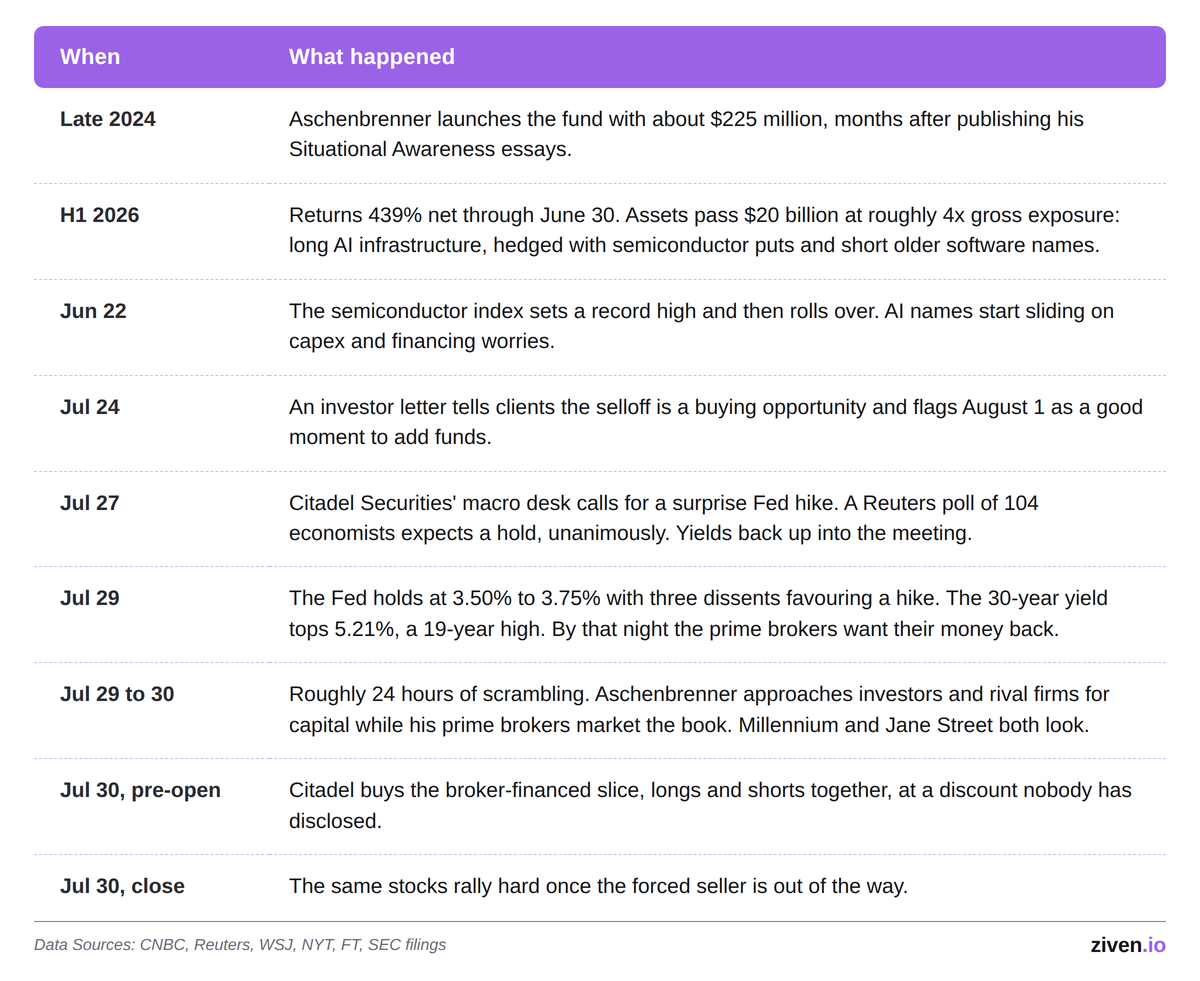
The cause for the sale is not mysterious. It was margin calls, as everyone has now reported. Here is the sequence of events, drawn from various sources.
The Timeline
What Citadel Actually Bought
Citadel did not buy the fund. It bought the broker-financed slice of the public portfolio: the portion carried with borrowed money. The other part of the book that was funded by client capital stayed where it was. So did every private investment, including a large stake in Anthropic. Reuters puts what remains at roughly $10 billion.
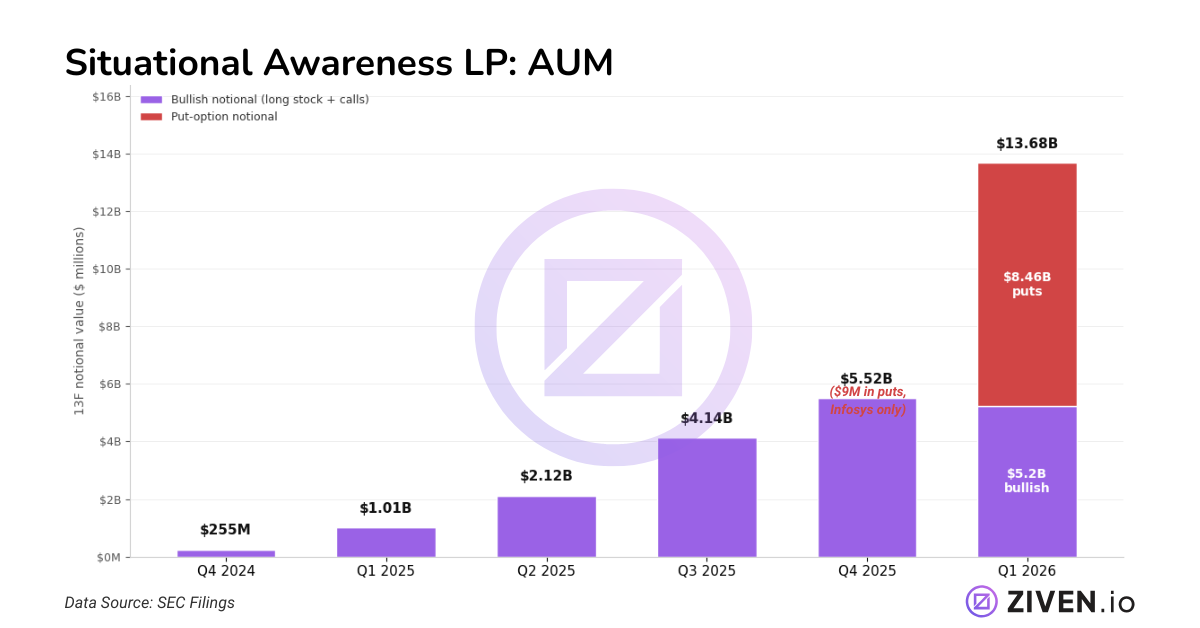
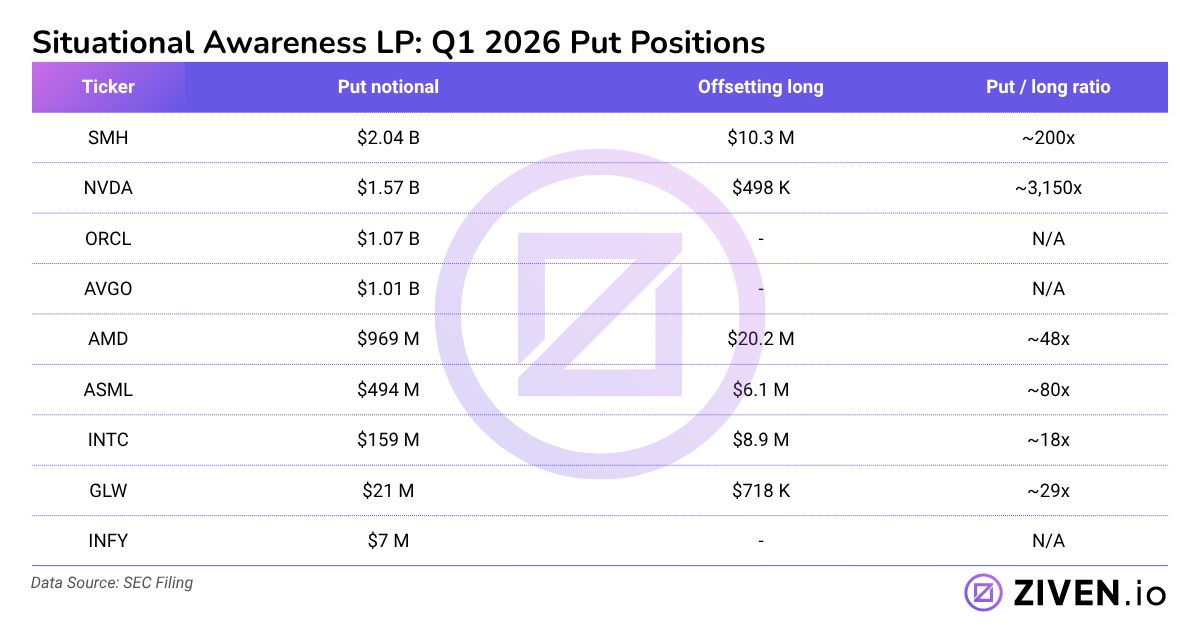
That distinction matters. It explains why the selling was so violent and so brief. At roughly 4x gross exposure, a 30% to 40% drawdown in the core longs wipes out the entire equity, and the hedges were not helping. Semiconductor puts and short positions in mega names moved the wrong way at the same time the longs were falling, the worst possible combination. Once that happens, the brokers set the timetable. You sell whatever they tell you to sell, at whatever price is available at four in the morning.
The other pressure in July came from the cost of money. The Fed held rates on Wednesday, through three officials dissenting in favour of a hike. Bond yields jumped, and the 30-year reached its highest level since 2007. Almost every AI infrastructure name we cover is a long-duration asset built with other people’s money. Higher rates therefore hit twice: they raise the discount rate applied to cash flows that only arrive years from now, and they make the capital needed to fund the build-out more expensive. Whether the data centres themselves ever get finished is a separate question. Nothing that happened this week helps.
Thursday's Bounce
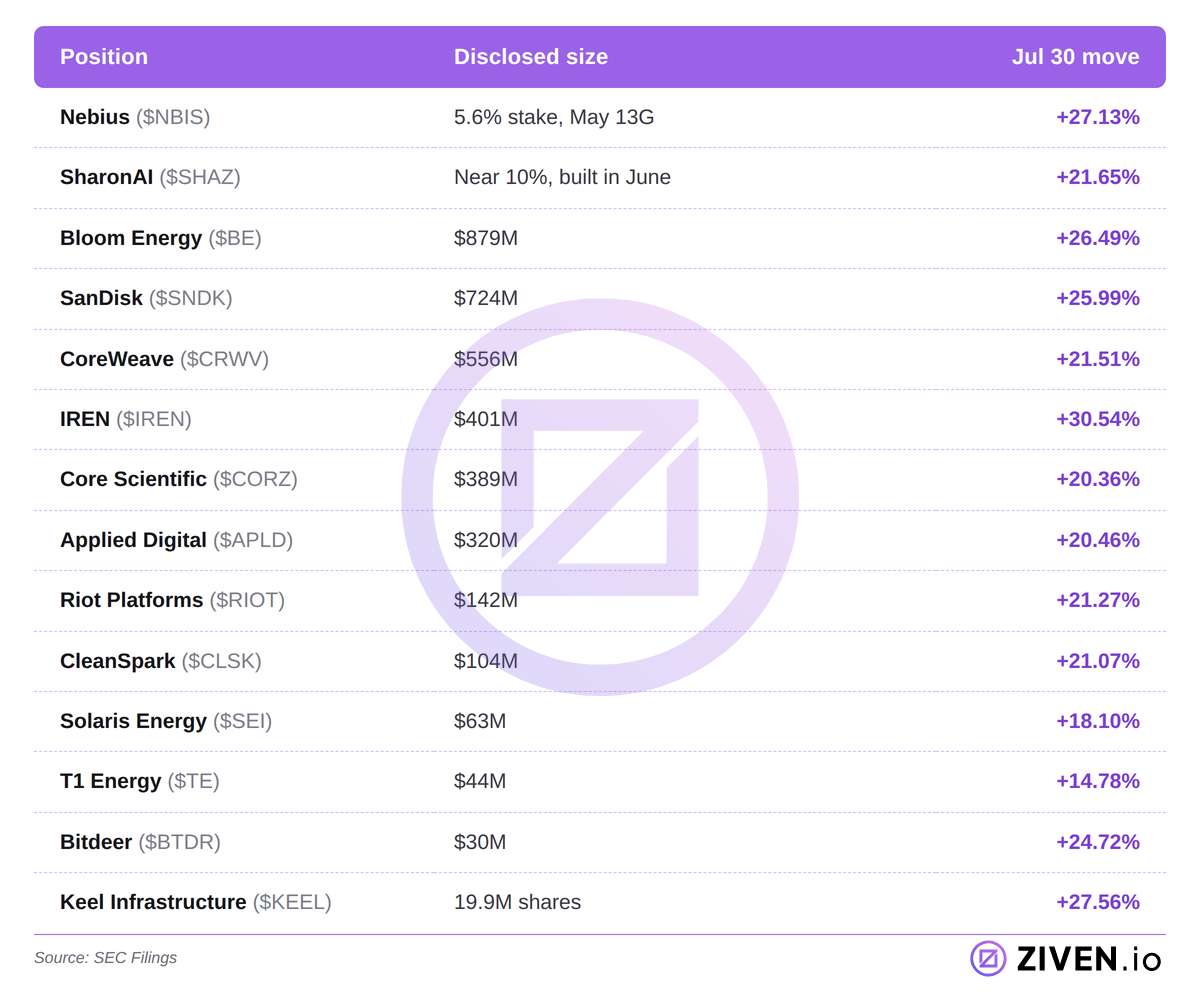
Ironically enough, the fund's largest disclosed long positions bounced hard after the news broke.
Final Thoughts
Important to note that Situational Awareness is not dissolving. It will private the book, which is argued the better half of it, including a substantial position in Anthropic, a company last valued at $965 billion and widely expected to list within months. Reporting suggests the firm will keep trading public equities on a much smaller scale while sitting mostly in privates from here. Aschenbrenner is 25. If he takes the right lesson from this week, there is very little stopping him from raising again, and I would not be surprised if he does.
For those of us who invest in this sector, the useful takeaway is limited. Power is still scarce, the buildouts are still under construction, and the companies in that table are doing the same thing this week that they were doing last month. What broke was 4x leverage running into a bad month, which is a far older story than AI.
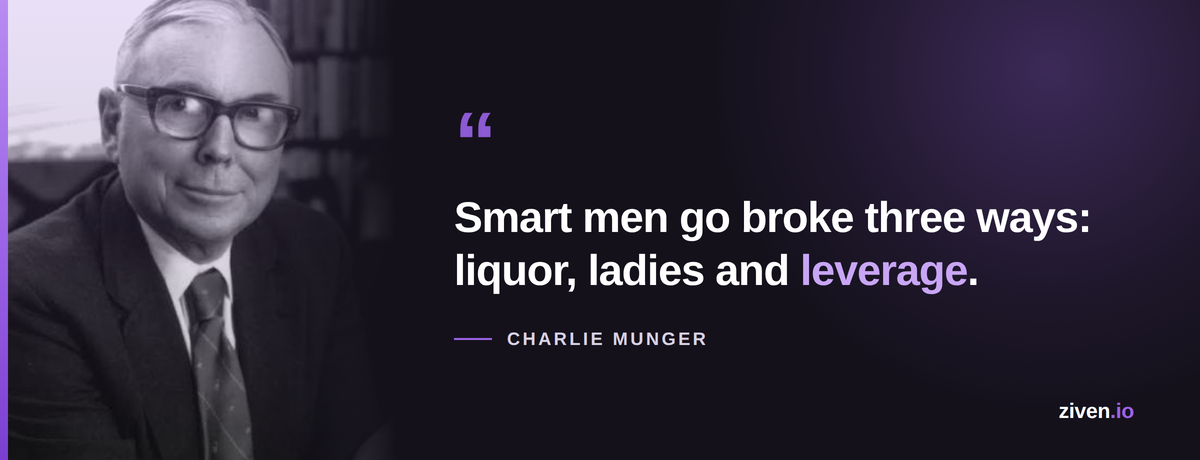
Buffett’s line, which he credits to Munger, is that there are only three ways a smart person can go broke: liquor, ladies and leverage. I got liquidated years ago and have not touched margin since, so my read here is not a neutral one. Still, it is worth sitting with the possibility that Aschenbrenner turns out to be right about 2027 and it makes no difference to him, because he borrowed too much at the wrong time.
Disclaimer: This content is intended for informational purposes only and should not be construed as investment advice. Readers are encouraged to conduct their own research before making any investment decisions. Past performance is not indicative of future results. No recommendation or advice is being provided as to the suitability of any investment for any particular investor.


